


Future of Flight Training: How AR and VR Are Transforming Aviation
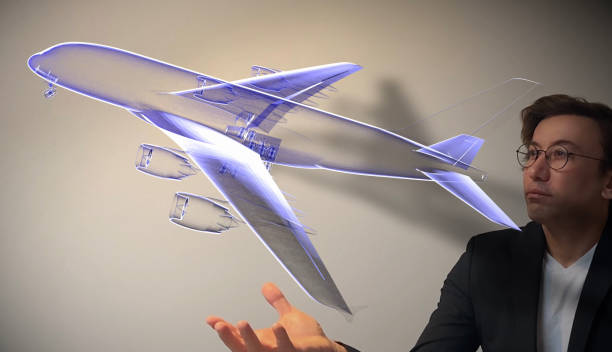
The aviation sector is undergoing a profound technological transformation driven by immersive digital tools. Augmented Reality (AR) and Virtual Reality (VR) are redefining training, maintenance, aircraft design, and passenger engagement. Airlines, defense agencies, and aircraft manufacturers are increasingly adopting immersive technologies to reduce operational costs, improve safety standards, and enhance workforce efficiency. As digital transformation accelerates globally, AR and VR solutions are becoming critical components of aviation modernization strategies.
One of the most influential areas of expansion is pilot and crew training. Traditional simulators, while effective, are expensive and resource intensive. AR and VR platforms provide highly realistic, cost efficient alternatives that replicate cockpit environments, emergency scenarios, and complex flight conditions. These systems enable trainees to practice repeatedly without fuel consumption or aircraft downtime. As airlines strive to address pilot shortages and rising training expenses, immersive solutions offer measurable operational benefits.
Maintenance, Repair, and Overhaul (MRO) operations are also evolving rapidly. Technicians equipped with AR headsets can access real time overlays, step by step repair instructions, and remote expert assistance. This significantly reduces errors, shortens turnaround time, and improves aircraft availability. VR environments are further used for maintenance simulations, allowing teams to rehearse intricate procedures before working on live aircraft systems.
Aircraft design and engineering processes are benefiting from immersive visualization. Engineers can collaborate in virtual environments to examine aircraft structures, assess ergonomics, and identify design flaws before production. This accelerates development cycles and minimizes costly modifications during later stages. As aerospace manufacturers pursue innovation while maintaining strict compliance standards, immersive collaboration tools play a crucial role.
Commercial airlines are leveraging immersive technologies to enhance passenger experiences. VR based entertainment, AR guided airport navigation, and immersive cabin previews are improving customer satisfaction and brand differentiation. These initiatives are particularly relevant in competitive aviation markets where customer loyalty and service quality are key differentiators.
The AR VR Aviation Market is expanding as technology providers partner with aerospace companies to deliver tailored solutions. Cloud integration, AI powered analytics, and 5G connectivity are strengthening the performance and scalability of AR and VR platforms. These advancements ensure seamless data sharing, high resolution rendering, and real time performance monitoring across aviation operations.
According to insights on AR VR Aviation Market Growth, increasing investments in aviation training infrastructure and digital transformation initiatives are fueling industry expansion. Defense aviation programs are particularly significant contributors, as military forces prioritize advanced simulation systems for pilot readiness and mission planning. The integration of immersive technologies into unmanned aerial systems and space exploration initiatives further broadens application scope.
Regionally, North America remains a leading adopter due to strong aerospace manufacturing capabilities and high defense spending. Europe follows closely with innovation driven aviation ecosystems, while Asia Pacific is emerging as a high growth region supported by expanding commercial fleets and airport infrastructure development. Government support for aviation modernization is accelerating adoption across developing markets as well.
Despite promising prospects, challenges persist. High initial investment requirements, cybersecurity concerns, and integration complexities can slow deployment. Additionally, ensuring regulatory compliance and system interoperability requires coordinated industry efforts. However, ongoing research, declining hardware costs, and improved software capabilities are gradually mitigating these barriers.
Looking ahead, immersive technologies are expected to become integral to aviation operations worldwide. As hardware becomes lighter and more powerful, and software platforms become increasingly sophisticated, AR and VR will extend beyond training into real time operational decision support and predictive maintenance. Continuous innovation and cross industry collaboration will shape the next phase of aviation digitization.
In conclusion, immersive technologies are redefining the aviation landscape by enhancing safety, efficiency, and customer engagement. As digital transformation continues, AR and VR solutions are poised to play a pivotal role in shaping the future of global aviation.
Browse More Report:
UAV Flight Training and Simulation Market
C4ISR Market
More Electric Aircraft Market
Military Satellite Market
Nano Micro Satellite Market
Satellite Manufacturing Launch Market
Commercial Airport Baggage Handling Systems Market
Airport Passenger Screening Systems Market
Air Cargo Security Screening Market
Commercial Aircraft Cabin Interior Market

 English
 Arabic
 French
 Spanish
 Portuguese
 Turkish
 Dutch
Dutch
 Italiano
 Russian
 Romaian
 Portuguese (Brazil)
 Greek
Greek