


The Role of Technology in Modern Project Management Services
The construction industry has historically been one of the slowest sectors to adopt digital innovation. For decades, the image of a project manager was someone with a rolled-up set of blueprints under one arm and a clipboard in the other, shouting instructions over the noise of a generator. Communication happened via phone calls, and documentation was stored in dusty filing cabinets. In the fast-paced, high-stakes environment of Dubai’s construction sector, this analog approach is no longer just inefficient; it is a liability.
The landscape has shifted dramatically. Today, the difference between a project that finishes on time and one that spirals into litigation often comes down to the digital tools employed. Technology has ceased to be a "nice-to-have" add-on. It has become the central nervous system of effective delivery. Modern project management services are now defined by their ability to leverage data, automation, and real-time connectivity to control the chaos of the job site.
This article explores how technology has revolutionized the field, transforming project managers from reactive troubleshooters into proactive data analysts who can predict and prevent issues before they impact the bottom line.
The Shift to Cloud-Based Collaboration
The most immediate impact of technology is the death of the information silo. In the past, the architect had one version of the drawings, the structural engineer had another, and the contractor on site was often working from a version that was three weeks old. This fragmentation was the root cause of countless errors and rework.
The advent of Common Data Environments (CDEs) has unified the team. Platforms like Autodesk Construction Cloud, Procore, and Aconex allow modern project management services to host a single source of truth. Every document, every RFI (Request for Information), and every submittal lives in the cloud.
When a revision is made in the design office, it is instantly available to the foreman on the tablet at the construction site. There is no lag time. This synchronization eliminates the "I didn't get the memo" excuse. It ensures that every stakeholder, from the client in their office to the subcontractor in the basement, is looking at the exact same data. This level of transparency builds trust and drastically reduces the administrative friction that typically slows down large projects.
BIM: The Engine of Modern Management
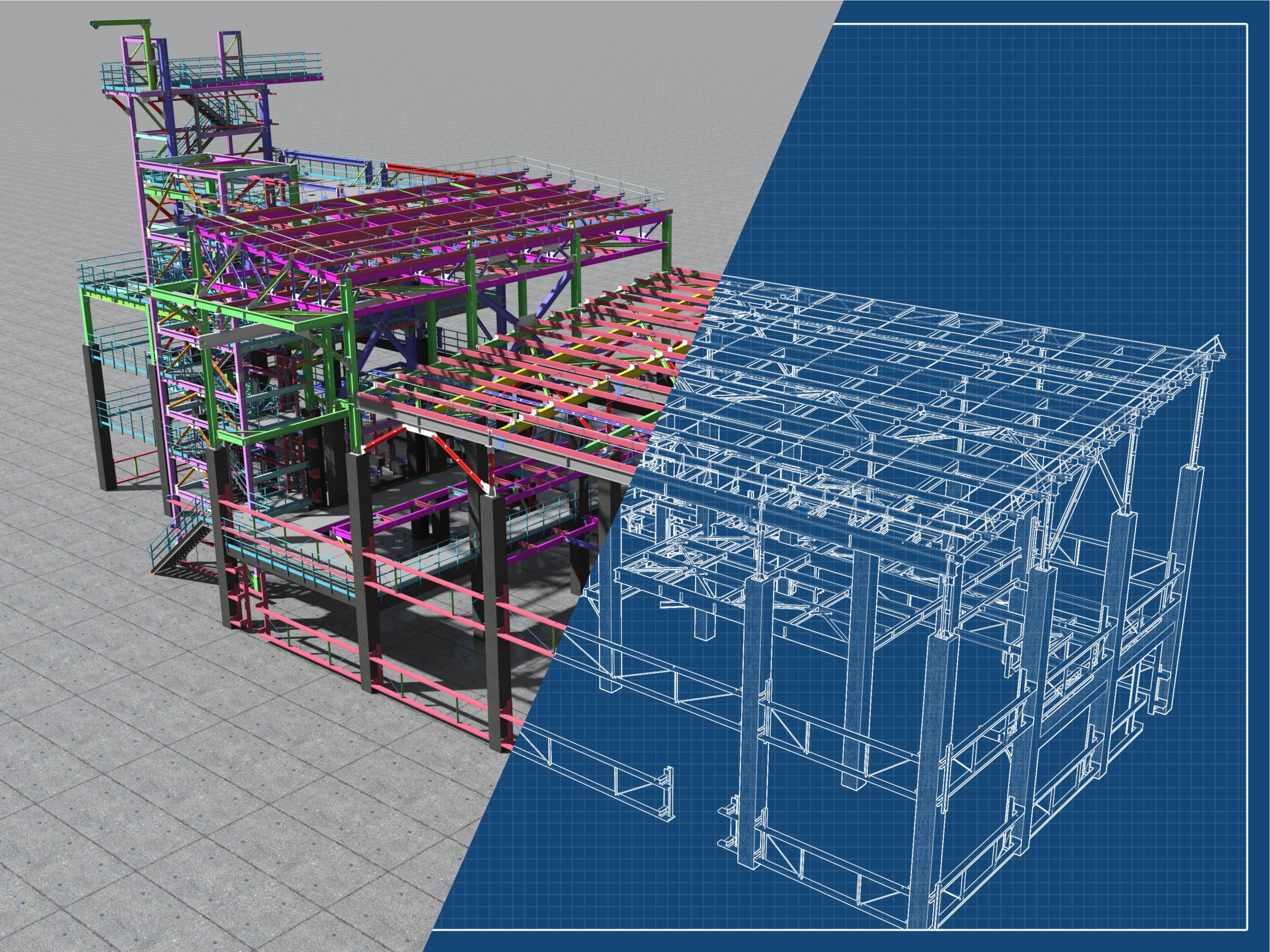
Building Information Modeling (BIM) is often mistaken as merely a design tool for architects. However, for a project manager, it is a powerful management instrument. It moves the project from 2D abstraction to 3D reality.
In a modern workflow, the project manager does not just look at a schedule; they watch it. Through 4D BIM, the construction schedule is linked to the 3D model. This creates a visual simulation of the build sequence. The manager can see the building grow week by week on their screen.
This visualization allows them to identify logistical clashes that a Gantt chart would hide.
- They can see if the crane placement will block the delivery route in Month 3.
- They can verify if the facade installation is starting before the concrete has cured.
- They can plan safety perimeters dynamically as the building rises.
By simulating the construction virtually, the project manager solves problems in the digital world where the cost of a fix is zero, rather than in the physical world where the cost is high.
Real-Time Data and Predictive Analytics
Construction projects generate massive amounts of data every day. In the past, this data was lost or buried in daily reports that no one read. Technology now allows project management services to harvest this data and turn it into actionable intelligence.
Dashboards have replaced spreadsheets. A modern project manager opens their laptop to see a live Pulse of the Project. They can see exactly how many safety incidents occurred yesterday, how much concrete was poured versus the target, and how many RFIs are overdue.
But the real game-changer is predictive analytics. AI-driven algorithms can analyze historical data to predict future risks. For example, if the data shows that a specific subcontractor consistently slows down when the humidity rises above 80%, the system can flag a potential delay risk for the upcoming summer months. This allows the manager to intervene early, perhaps by adjusting the shift hours, to keep the project on track. It shifts the management style from "fighting fires" to "preventing sparks."
Mobile Field Management
The disconnect between the office trailer and the active workface has always been a challenge. Decisions made in the air-conditioned office often fail to translate to the hot, dusty reality of the site. Mobile technology has bridged this gap.
Field management apps allow site engineers and supervisors to carry the entire project in their pockets. They can pull up specs, check details, and snap photos of issues instantly.
- Digital Snagging: Instead of writing a defect on a notepad and typing it up later, the manager snaps a photo of a cracked tile, pins it to the floor plan location on their iPad, and assigns it to the flooring contractor instantly. The contractor gets a notification on their phone immediately.
- Safety Inspections: Safety officers can complete digital checklists that are time-stamped and geo-tagged. This ensures that inspections are actually happening and provides a defensible audit trail.
- Daily Logs: Voice-to-text features allow supervisors to dictate their daily logs while walking the site, ensuring that rich detail is captured without the burden of typing reports at the end of a long shift.
This mobility ensures that the project management team is visible and active on site, rather than being chained to their desks doing paperwork.
Drones and Aerial Surveillance
On the massive infrastructure and mega-projects common in the UAE, getting a clear view of progress can be difficult. Walking the perimeter of a sprawling site might take hours. Drones have solved this problem.
Unmanned Aerial Vehicles (UAVs) provide a bird's-eye view that is invaluable for modern project management services. A drone flight can map the entire site in minutes, generating high-resolution orthomosaics and 3D terrain models.
This data is used for:
- Earthworks Tracking: The drone creates a topographical map that can calculate exactly how much soil has been excavated or filled. This verifies subcontractor payment claims with mathematical precision.
- Progress Monitoring: Weekly aerial photos provide an indisputable record of progress. Clients who are overseas can log in and see high-definition views of their investment.
- Safety Logistics: Managers can view the site traffic flow from above to identify dangerous intersections or congested laydown areas that need reorganization.
IoT and the Smart Job Site
The Internet of Things (IoT) is bringing connectivity to the physical assets on the site. Sensors are now being attached to everything from excavators to workers' helmets.
For equipment, telematics sensors track usage hours, fuel consumption, and location. A project manager knows instantly if a rented generator is sitting idle for three days, costing money without adding value. They can off-hire it immediately.
For workforce management, smart badges or helmet tags can track the location of personnel. In the event of an emergency or evacuation, the manager can see instantly on a dashboard if everyone has reached the muster point or if someone is still inside the building. This technology enhances safety and provides granular data on labor productivity.
Automation of Administrative Tasks
Project management involves a significant amount of administration. Tracking submittals, updating logs, sending meeting minutes, and chasing approvals can consume 50% of a manager's week. Technology allows for the automation of these low-value tasks.
Robotic Process Automation (RPA) tools can handle the routine flow of information. If an RFI is not answered within 3 days, the system automatically sends a reminder email to the consultant. If a safety report is filed, the system automatically updates the KPI dashboard.
By automating the "busy work," technology frees up the project manager to focus on high-value activities: solving complex engineering problems, negotiating with stakeholders, and leading the team. It allows the human intelligence to be applied where it matters most.
Enhanced Client Transparency
One of the biggest friction points in construction is the client relationship. Clients often feel they are in the dark, writing checks without knowing what is really happening behind the hoarding. Technology has democratized data, allowing for total transparency.
Modern project management services provide clients with their own login portals. A developer in London can log in to check their project in Dubai. They can see live camera feeds, view the updated budget, read the latest executive summary, and see the drone footage.
This transparency builds immense confidence. When a client can see the progress for themselves, they are less likely to panic and more likely to trust the project manager's recommendations when challenges arise. It transforms the relationship from adversarial to collaborative.
Sustainability and Environmental Tracking
With the UAE’s increasing focus on sustainability and green building regulations, tracking environmental impact is a core responsibility. Technology makes this tracking accurate and effortless.
BIM models can simulate energy performance and carbon footprint analysis during the design phase. During construction, digital waste tracking logs can record exactly how many tons of debris were recycled versus sent to landfill. Noise and dust sensors on the site boundary can send real-time alerts to the project manager if levels exceed municipality limits, allowing for immediate mitigation before fines are issued.
Conclusion
The construction industry is no longer about brute force; it is about smart execution. The scale of modern projects and the speed of the market mean that human effort alone is no longer enough to guarantee success. You need a digital multiplier.
Technology provides the eyes to see the whole project, the brain to analyze the data, and the voice to communicate instantly with the team. It reduces risk, protects margins, and ensures safety. However, buying the software is not enough. You need a team that knows how to deploy it.
This is where Your BIM Partner excels. We do not just use technology; we integrate it into the DNA of our project delivery.
Our approach to project management services is built on a foundation of digital excellence. From 4D scheduling and 5D cost estimation to drone surveying and cloud collaboration, we use the latest tools to give you total control over your project. We combine deep engineering expertise with cutting-edge tech to deliver projects in Dubai that are on time, on budget, and built to the highest standards. Partner with us to experience the future of construction management today.

 English
 Arabic
 French
 Spanish
 Portuguese
 Turkish
 Dutch
Dutch
 Italiano
 Russian
 Romaian
 Portuguese (Brazil)
 Greek
Greek