


Why Is API Software Becoming the Backbone of Digital Applications?
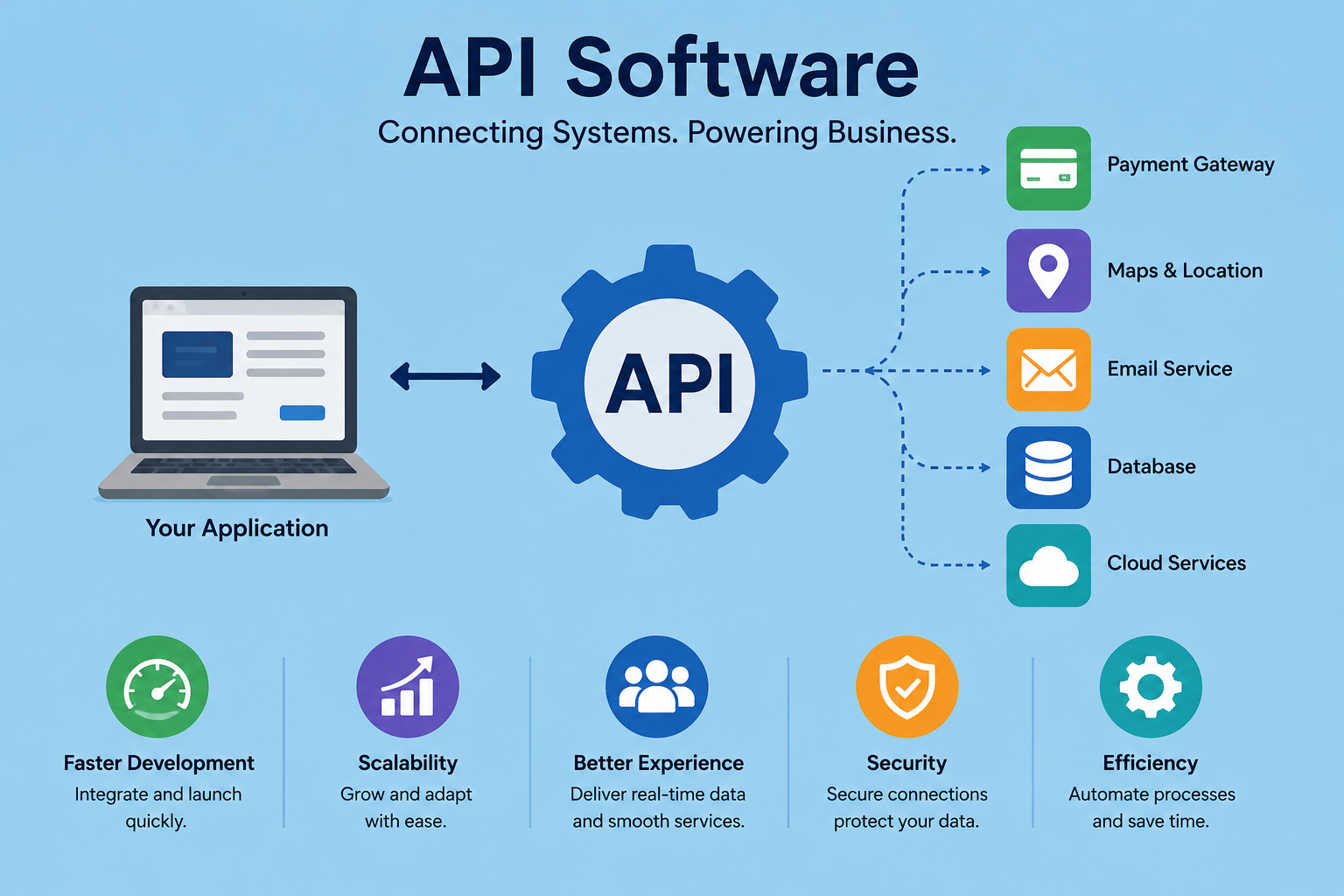
Modern businesses depend on speed, automation, and smooth digital experiences to stay competitive. Whether it is an online shopping platform, a banking app, a travel booking website, or a customer support portal, most systems now rely on connections between multiple services. This is where API software plays an important role in helping applications communicate and exchange information efficiently.
Companies no longer build every feature from scratch. Instead, they connect tools, services, and platforms through APIs to improve development speed and user experience. This approach saves time, reduces operational costs, and helps businesses launch products faster without compromising quality.
As digital ecosystems continue to expand, APIs are becoming one of the most valuable technologies behind modern applications.
Understanding the Role of APIs in Modern Technology
An API, or Application Programming Interface, acts as a bridge between different systems. It allows one application to request data or services from another application securely and efficiently.
For example, when users log into a website using their Google account, an API helps connect the website with Google’s authentication service. Similarly, weather apps, payment gateways, maps, and currency converters all work through APIs.
The growing demand for connected platforms has increased the importance of reliable API solutions in almost every industry.
Why Businesses Depend on APIs More Than Ever
Digital applications are expected to deliver fast and personalized experiences. Customers want instant responses, secure payments, real time updates, and smooth navigation. APIs help businesses meet these expectations without building everything internally.
Here are some reasons businesses are investing heavily in API based systems.
Faster Product Development
Developers can integrate ready made services instead of creating every feature from the beginning. This speeds up the development process and reduces technical complexity.
For example, a startup building an ecommerce platform can integrate payment processing, shipping tracking, email verification, and customer messaging APIs within days rather than spending months developing those systems independently.
This helps businesses launch products quickly and focus on innovation.
Improved Scalability
Modern applications must handle growing traffic and changing user demands. APIs make scaling easier because companies can connect additional services whenever required.
Instead of rebuilding an entire application, developers can simply integrate new functionalities through APIs. This flexible structure supports long term growth while maintaining application performance.
Better User Experience
Users expect applications to work smoothly across devices and platforms. APIs help synchronize information in real time, improving the customer experience.
For example:
- Food delivery apps use maps and tracking APIs
- Banking apps use secure payment APIs
- Travel websites use flight and hotel booking APIs
- Ecommerce platforms use shipping and inventory APIs
These integrations make applications more efficient and convenient for users.
How APIs Support Digital Transformation
Digital transformation is no longer limited to large enterprises. Small businesses, startups, and online service providers are also adopting connected technologies to improve operations.
APIs support this transformation by helping businesses automate workflows and connect software systems easily.
Automation of Daily Processes
Many repetitive tasks can now be automated using APIs. Businesses can connect customer management systems, accounting software, email marketing platforms, and analytics tools together.
This reduces manual work and improves productivity.
For example, customer information collected through a website form can automatically move into a CRM system while triggering welcome emails and support notifications simultaneously.
Real Time Data Access
Applications today depend heavily on real time information. APIs help systems exchange live data instantly.
This is especially important for industries such as:
- Finance
- Ecommerce
- Healthcare
- Logistics
- Travel
- Education
Real time communication improves decision making and keeps users informed with accurate information.
Multi Platform Connectivity
Modern businesses operate across websites, mobile apps, cloud platforms, and third party tools. APIs ensure smooth communication between all these systems.
Without APIs, companies would struggle to maintain consistent functionality across multiple platforms.
Why Developers Prefer API Driven Architecture
Developers prefer API driven systems because they simplify software development and maintenance.
Instead of creating large monolithic applications, teams can build smaller services that work independently but communicate through APIs.
This architecture provides several benefits.
Easier Maintenance
When applications are divided into separate services, developers can update one component without affecting the entire system.
This reduces downtime and simplifies troubleshooting.
Faster Collaboration
Different development teams can work on different services at the same time. APIs help connect these services together smoothly.
This improves project efficiency and speeds up product delivery.
Greater Flexibility
Businesses often need to adapt quickly to changing market demands. API based systems allow developers to add new features or services without major disruptions.
This flexibility is essential for companies operating in competitive digital industries.
Security Is Strengthening API Adoption
As digital services expand, security becomes a major concern. Modern API systems include strong authentication and encryption methods to protect user data.
Many APIs now use technologies such as:
- OAuth authentication
- API keys
- Token based access
- Data encryption
- Rate limiting
These security practices help businesses safely exchange sensitive information between applications.
Reliable API management also allows organizations to monitor traffic, detect unusual activity, and maintain compliance standards.
APIs Are Driving Innovation Across Industries
The impact of APIs can be seen in nearly every industry.
Ecommerce
Online stores integrate payment systems, shipping providers, recommendation engines, and customer support tools through APIs.
This creates faster and more personalized shopping experiences.
Healthcare
Healthcare applications use APIs to connect patient records, appointment systems, and medical databases securely.
This improves communication between healthcare providers and patients.
Finance
Banking and financial applications rely heavily on APIs for secure transactions, fraud detection, and real time account updates.
Digital banking would not function efficiently without API integrations.
Education
Online learning platforms use APIs for video streaming, user authentication, progress tracking, and communication tools.
This helps educational services deliver interactive learning experiences.
The Rise of Cloud Computing and APIs
Cloud computing has accelerated the growth of APIs significantly. Businesses now rely on cloud based tools for storage, analytics, communication, and application hosting.
APIs allow these cloud services to work together seamlessly.
For example, a business can connect cloud storage, customer support software, payment processing, and analytics platforms into a single workflow using APIs.
This interconnected environment improves operational efficiency while reducing infrastructure costs.
Why APIs Matter for Small Businesses and Startups
APIs are not only beneficial for large corporations. Small businesses and startups also gain significant advantages from API integration.
They can access advanced technologies without building expensive systems internally.
This includes:
- Payment gateways
- Email verification services
- Geolocation tools
- Currency conversion systems
- Communication platforms
- Marketing automation tools
As a result, startups can compete more effectively while keeping development budgets manageable.
The Future of API Based Applications
The future of digital technology will depend heavily on APIs. Emerging technologies such as artificial intelligence, IoT devices, smart automation, and cloud infrastructure all rely on connected systems.
APIs will continue helping businesses integrate services faster and deliver smarter digital experiences.
As applications become more data driven and interconnected, organizations that invest in strong API strategies will have a major competitive advantage.
Businesses are also expected to focus more on API management, security, and performance optimization to support growing digital ecosystems.
Conclusion
The digital world is becoming increasingly connected, and APIs are making that connectivity possible. From improving automation to enabling real time communication, APIs support the functionality behind many modern platforms and services.
Businesses now depend on scalable and flexible systems to meet user expectations, and APIs provide the foundation for that growth. Whether it is ecommerce, healthcare, finance, or education, API driven development is helping organizations create faster, smarter, and more reliable digital experiences.
As technology continues to evolve, the importance of API application development will only grow stronger for businesses looking to stay competitive in the digital market.
FAQs
What is the main purpose of API software?
The main purpose of API software is to allow different applications and systems to communicate with each other securely and efficiently. APIs help businesses connect services, automate tasks, and improve user experiences without building every feature from scratch.
Why are APIs important for modern applications?
APIs are important because modern applications rely on multiple services working together. APIs help applications share data, process requests in real time, and support features such as payments, authentication, maps, and notifications.
How do APIs help businesses grow?
APIs help businesses grow by improving scalability, reducing development time, and enabling faster innovation. They allow companies to integrate powerful services quickly, improve customer experiences, and adapt easily to changing digital demands.

 English
 Arabic
 French
 Spanish
 Portuguese
 Deutsch
 Turkish
 Italiano
 Russian
 Romaian
 Portuguese (Brazil)
 Greek
Greek