


How Proper Battery Waste Management Builds a Greener Future
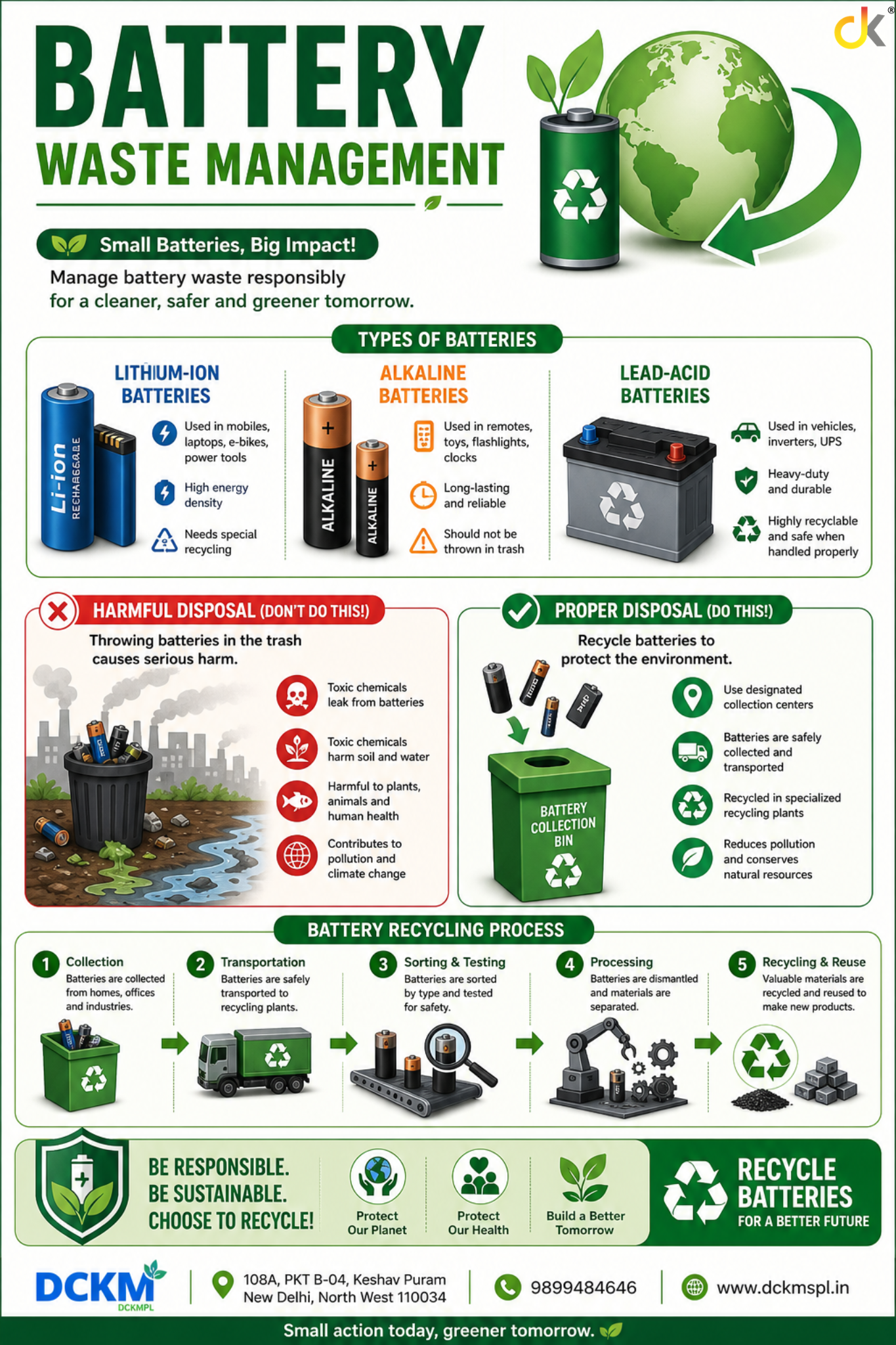
Every year, billions of batteries reach the end of their life cycle — and most of them end up in landfills. Battery waste management is no longer a fringe environmental concern; it is a critical pillar of sustainable industrial and consumer practices. As global demand for batteries surges, driven by electric vehicles, smartphones, and renewable energy storage, the way we handle battery waste will define the health of our planet for generations to come.
In this blog, we explore why responsible battery waste management matters, what risks arise when it is ignored, and how businesses and individuals can take meaningful action today.
The Hidden Dangers of Battery Waste
Batteries contain a complex cocktail of chemicals — lead, lithium, cadmium, mercury, and nickel — that pose serious threats when they are improperly discarded. When batteries are dumped into general waste streams, they leach toxic substances into:
-
Soil — degrading agricultural land and contaminating groundwater
-
Water bodies — poisoning aquatic ecosystems and drinking water sources
-
Air — releasing harmful fumes when batteries corrode or catch fire in landfills
Beyond environmental harm, improper disposal of battery waste creates significant public health risks. Communities living near unregulated dumping sites face elevated exposure to heavy metals, increasing the risk of neurological disorders, kidney damage, and respiratory illness.
Electronic waste, which includes batteries from laptops, mobile devices, and industrial equipment, is one of the fastest-growing waste streams globally. According to international environmental bodies, the world generates tens of millions of tonnes of electronic waste annually — and only a fraction is recycled through formal channels.
Why Battery Waste Management Is a Business Responsibility
For companies operating in manufacturing, import-export, electronics, or logistics, battery waste management is not just an ethical obligation — it is increasingly a regulatory and compliance requirement.
Governments across the globe are tightening norms around electronic waste and battery disposal. Businesses that fail to comply risk:
-
Heavy penalties and import/export restrictions
-
License cancellations affecting trade operations
-
Reputational damage that erodes customer trust
-
Legal liability for environmental contamination
In India, the Battery Waste Management Rules (2022) brought a comprehensive framework that holds producers, importers, and brand owners accountable through Extended Producer Responsibility (EPR). Under EPR norms, businesses must ensure that a defined percentage of their batteries are collected and recycled through authorized channels.
This means that businesses engaged in the import or export of battery-powered goods, electronics, or industrial equipment must integrate battery waste compliance into their overall trade and regulatory strategy.
Key Steps to Responsible Battery Waste Management
Building a greener supply chain begins with understanding your waste obligations and putting the right systems in place. Here are the essential steps businesses and organisations should follow:
1. Register and Comply with EPR Norms
Producers, importers, and brand owners must register with the Central Pollution Control Board (CPCB) under India's Battery Waste Management Rules. EPR registration ensures your business is legally compliant and demonstrates environmental accountability.
2. Partner with Authorised Recyclers
Work exclusively with government-authorised recyclers and dismantlers who can process battery waste safely. Avoid informal or unregulated waste handlers, as these channels increase environmental harm and expose your business to legal risk.
3. Establish Collection Mechanisms
Set up take-back programmes or collection points where consumers and distributors can return used batteries. Many businesses embed this into their after-sales service as a value-add that also fulfils compliance obligations.
4. Maintain Documentation and Reporting
Regulators require businesses to submit periodic reports on the quantity of batteries sold, collected, and recycled. Proper documentation protects your business in the event of an audit or inspection.
5. Train Your Team
Ensure that your procurement, logistics, and compliance teams understand battery waste regulations. Human error in documentation or disposal procedures can create serious legal exposure.
The Link Between Battery Waste and Global Trade Compliance
What many importers and exporters overlook is the deep connection between battery waste regulations and trade compliance. When you import electronic goods or batteries, you inherit a set of environmental obligations under domestic law. When you export, the destination country may impose its own standards for battery composition and recyclability.
Failing to account for these factors leads to:
-
Shipment rejections at ports of entry
-
Customs delays due to missing environmental compliance certificates
-
Non-compliance notices from regulatory bodies like CPCB or DGFT
A well-structured trade compliance programme must therefore incorporate battery waste and electronic waste obligations as a standard component — not an afterthought.
This is where professional guidance makes all the difference.
Read More - 🌍 RoDTEP Scheme: Rates, Guidelines, Eligibility, Features, Benefits
How Expert Trade Programmes Support Greener Business Practices
Navigating the intersection of trade law and environmental compliance requires specialised knowledge. Our suite of programmes is designed to help businesses stay compliant, trade confidently, and contribute to a sustainable future:
-
Import Export Consultancy Programs — End-to-end guidance on trade compliance, including environmental obligations
-
IEC Registration Assistance — Smooth registration for your Importer Exporter Code
-
DGFT Compliance Programs — Stay aligned with Directorate General of Foreign Trade requirements
-
Coal Import Monitoring System (CIMS) Registration — Compliance support for coal importers
-
Steel Import Monitoring Support (SIMS) — Regulatory assistance for steel trade
-
Export Documentation Programs — Error-free documentation to prevent shipment delays
-
Customs Compliance Support — Navigate customs regulations with confidence
-
License & Registration Assistance — From EPR to trade licences, we manage it all
-
Trade Advisory Programs — Strategic advice tailored to your industry and trade profile
-
End-to-End Import Export Solutions — Comprehensive support from registration to shipment clearance
Whether you are a new entrant to international trade or an established importer dealing with compliance complexity, our programmes are built to simplify the process while keeping you on the right side of the law.
Conclusion
The path to a greener future runs directly through how we manage the waste we generate today. Battery waste management is a responsibility shared by governments, businesses, and consumers alike. For companies engaged in import-export and trade, it is also a compliance imperative that cannot be ignored.
By adopting responsible battery waste practices, you not only protect the environment — you also build a more resilient, future-proof business that meets the expectations of regulators, customers, and global trade partners.
Our brand is committed to helping businesses navigate this complex landscape. With our comprehensive trade and compliance programmes, we ensure that your operations remain legally sound, environmentally responsible, and globally competitive. Partner with us to build the greener, smarter business your future demands.
Frequently Asked Questions (FAQ)
Q1. What is battery waste management and why does it matter?
Battery waste management refers to the systematic collection, recycling, and safe disposal of used batteries to prevent environmental contamination. It matters because batteries contain toxic chemicals that can harm soil, water, and human health if not handled properly.
Q2. Are businesses legally required to manage battery waste in India?
Yes. Under India's Battery Waste Management Rules (2022), producers, importers, and brand owners are required to comply with Extended Producer Responsibility (EPR) norms, which mandate the collection and recycling of a specified percentage of batteries sold.
Q3. How does battery waste relate to import-export compliance?
Importing battery-powered goods or electronics creates environmental obligations under domestic law. Failure to meet these obligations can result in shipment rejections, customs delays, and regulatory penalties that directly impact your trade operations.
Q4. What is EPR registration and who needs it?
EPR (Extended Producer Responsibility) registration is a mandatory compliance requirement for producers, importers, and brand owners of batteries in India. It is obtained through the Central Pollution Control Board (CPCB) and ensures accountability for battery collection and recycling.
Q5. How can a trade consultancy help with battery waste compliance?
A trade consultancy can assist with EPR registration, documentation, regulatory filings, and ensuring your import-export operations align with both DGFT requirements and environmental regulations — reducing legal risk and streamlining compliance.
Q6. What happens if a business ignores battery waste regulations?
Non-compliant businesses face penalties, import/export licence cancellations, legal liability for environmental damage, and reputational harm. Staying compliant protects both your business and the environment.


 Arabic
 French
 Spanish
 Portuguese
 Deutsch
 Turkish
 Dutch
Dutch
 Italiano
 Russian
 Romaian
 Portuguese (Brazil)
 Greek
Greek