


10 Things Every Trader Should Know About Currency Cross Rates
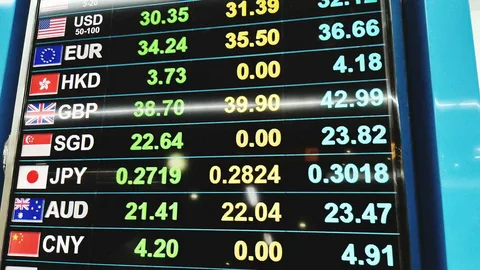
So you've been trading for a while now, or maybe you're just getting started, and someone mentions "cross rates" and you kinda nod like you get it… but do you really? Don't worry, most people don't explain this stuff in plain English. That's exactly what I'm trying to do here.
Whether you're a forex trader, a fintech enthusiast, or just someone trying to make sense of global markets, understanding currency cross rates can genuinely change how you look at price movements. Let's get into it.
1. What Even Are Currency Cross Rates?
Okay so let me just say this simply — currency cross rates are exchange rates between two currencies that don't involve the US dollar. Yep, that's basically it.
Like if you wanna know how many Euros you get for one British Pound, that's a cross rate. The USD isn't part of the equation at all. These pairs are sometimes called "crosses" and they're actually used a lot more than beginners realize.
2. Why Currency Cross Rates Matter More Than You Think
Here's the thing a lot of new traders miss. The forex market doesn't always move in a straight line tied to the dollar. Sometimes the real action is happening between two other currencies.
-
Cross rates help you spot opportunities that USD pairs might hide
-
They're great for traders who want to diversify their strategies
-
Some crosses are more volatile and can offer bigger moves
If you're only watching EUR/USD all day, you might be missing some of the best setups in the market.
3. How Cross Rates Are Actually Calculated
This part sounds complicated but it's really not. Let me give you a super simple example.
Say EUR/USD = 1.10 and USD/JPY = 150. To find EUR/JPY (a cross rate), you just multiply: 1.10 × 150 = 165. So EUR/JPY would be around 165.
That's literally how it works. Most platforms do this math for you automatically, but knowing the logic helps you understand why cross rates move when major pairs move.
4. The Most Popular Cross Pairs You Should Know
Not all crosses are created equal. Some have way more volume and tighter spreads than others. Here are the ones traders actually care about:
-
EUR/GBP — Euro vs British Pound, very popular in Europe
-
EUR/JPY — Euro vs Japanese Yen, loved by momentum traders
-
GBP/JPY — sometimes called "the dragon," it moves fast and hard
-
AUD/JPY — popular with carry traders
-
EUR/CHF — more stable, used by conservative traders
These pairs have enough liquidity to trade smoothly without massive slippage.
5. Cross Rates and Market Correlations
Here's something kinda cool. Because cross rates are derived from major pairs, they're actually correlated with each other. If EUR/USD goes up and USD/JPY stays flat, EUR/JPY is probably going up too.
Understanding these relationships can help you:
-
Avoid over-exposing yourself to the same risk
-
Confirm trade setups using multiple pairs
-
Understand why a cross is moving even if there's no direct news
It's like looking at the market from a different angle and suddenly things make more sense.
6. Spreads on Crosses Are Usually Wider
Okay here's a practical warning. Cross pairs usually have wider bid-ask spreads compared to major pairs like EUR/USD or USD/JPY. That's just because they have less volume overall.
What this means for you practically:
-
Your entry and exit costs are slightly higher
-
Scalping crosses is harder because the spread eats into your profits
-
Swing trading or position trading tends to work better on crosses
Always check the spread before you jump into a cross pair trade. Platforms like Vunelix show you real-time rates for crosses so you can see exactly what you're working with before committing.
7. News Affects Crosses Differently
Here's something that trips up a lot of traders. When UK economic data comes out, it obviously moves GBP pairs. But if it's really strong data, GBP/JPY might move more dramatically than GBP/USD because there's a "double effect" from both currencies reacting.
So when you're trading crosses:
-
Pay attention to news from BOTH countries in the pair
-
Sometimes a boring week for the dollar can be wild for crosses
-
Central bank decisions in Europe, UK, Japan, or Australia can shake things hard
Keeping a calendar and watching both sides of your cross is just smart practice.
8. Cross Rates Are Great for Carry Trades
A carry trade is when you borrow money in a low-interest currency and invest it in a high-interest one. Cross rates are actually perfect for this strategy.
Classic example: Japanese Yen has had super low interest rates for years. Australian Dollar has had higher rates. So AUD/JPY became one of the most popular carry trade pairs in the world.
The idea is you earn the interest rate difference just by holding the position. Of course there's risk involved, especially if market sentiment shifts and everyone rushes out of risk assets at the same time. But if you understand it, carry trading with crosses can be part of a solid strategy.
9. Tools You Need to Track Cross Rates Properly
Honestly, you don't need anything fancy to start, but having the right tools makes a huge difference. Here's what actually helps:
-
Real-time price feeds — delayed data in forex is basically useless
-
Cross rate tables — see all your pairs in one place
-
Currency heatmaps — spot which currencies are strong or weak overall
-
Charts with good indicators — so you can actually analyze the setups
Vunelix offers a free platform with real-time forex data, currency cross rates tables, heatmaps, and advanced screeners all in one place. It pulls data from leading financial institutions and central banks, so you're not working with garbage data. And honestly for a free tool, that's pretty impressive — they cover 2000+ forex pairs, so the crosses you care about are definitely in there.
10. Common Mistakes Traders Make With Cross Pairs
Let me just be real with you here. These are mistakes I've seen over and over:
-
Ignoring the spread — trading a wide-spread cross like it's EUR/USD will hurt you
-
Forgetting both sides of the news — cross pairs have two economies to track
-
Over-correlating your positions — holding EUR/USD and EUR/GBP and EUR/JPY is basically tripling your Euro exposure
-
Using the wrong timeframe — some crosses need more room to breathe, tight stop losses get eaten
-
Not checking liquidity times — crosses involving AUD or NZD are most active during Asian session, not European
Avoiding these alone will put you ahead of a big chunk of traders out there.
Wrapping It Up
Look, currency cross rates aren't some secret advanced concept reserved for hedge fund managers. Once you understand the basics, they open up a whole new layer of opportunity in the forex market. Whether you're analyzing correlations, looking for carry trades, or just trying to diversify your watchlist — crosses deserve your attention.
And if you want a solid free place to start tracking currency cross rates and other forex data in real time, check out Vunelix. It's genuinely one of the more complete free platforms out there right now, especially for traders who want clean data without paying a fortune.
FAQs
What is the difference between a currency cross rate and a major pair?
A major pair always includes the US dollar, like EUR/USD or USD/JPY. A currency cross rate is any pair that doesn't involve the dollar at all, like EUR/GBP or AUD/JPY. Crosses are calculated using two major pairs as a reference.
Are cross rates harder to trade than major pairs?
Not necessarily harder, but different. They usually have wider spreads and require you to track news from two countries instead of one. Once you get the hang of that, they can actually offer some really good trading opportunities.
Why do cross rates move even when there's no direct news?
Because cross rates are derived from major pairs, any move in a major pair that includes one of your cross currencies will affect the cross. For example, if USD/JPY moves sharply, it'll ripple into EUR/JPY and GBP/JPY too.
Which currency cross pairs have the most liquidity?
EUR/GBP, EUR/JPY, and GBP/JPY are generally the most liquid crosses. They have higher volume, tighter spreads, and more price action compared to exotic crosses.
Can I trade cross rates on most forex platforms?
Yes, most forex brokers and data platforms include major cross pairs. Platforms like Vunelix let you view real-time cross rate data and charts for free, which is a good starting point before you move to actual trading.
Is it true that cross rates are better for carry trading?
In many cases, yes. Since carry trades depend on interest rate differences between two currencies, cross pairs like AUD/JPY or NZD/JPY are frequently used because Japan has historically kept very low interest rates, making it a popular funding currency.
How do I calculate a cross rate manually?
You take two major pairs that share the US dollar. Multiply or divide them depending on how the quote is structured. For example, EUR/JPY = EUR/USD × USD/JPY. Most trading platforms do this automatically, but knowing the math helps you understand what's happening.

 English
 Arabic
 French
 Spanish
 Portuguese
 Turkish
 Dutch
Dutch
 Italiano
 Russian
 Romaian
 Portuguese (Brazil)
 Greek
Greek