


The Geometry of Garden Movement and Plant Spacing
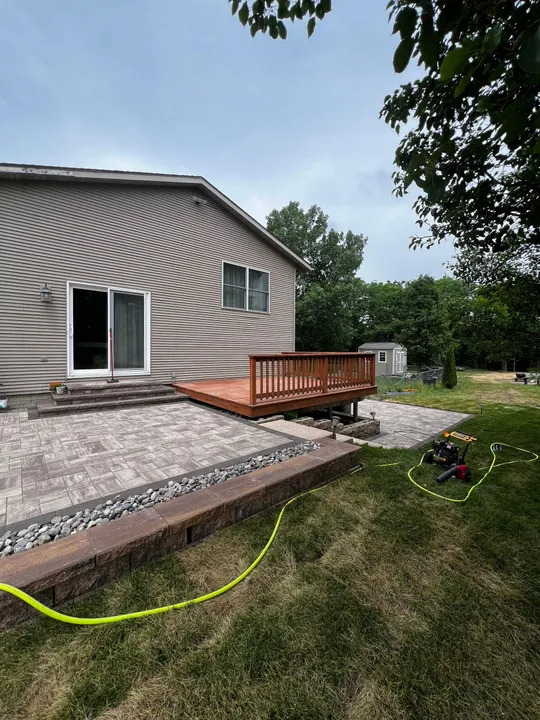
Landscape design is often perceived as purely artistic, but the integration of hardscapes and softscapes relies heavily on spatial mathematics and horticultural data. A walkway is not just a surface; it is a vector that controls the velocity and direction of human movement through a biological environment. Larkin Landscape and Design utilizes specific spacing metrics to ensure that the interaction between the pedestrian and the plant material is harmonious rather than adversarial.
The concept of "mature spread" is the most critical data point in this equation. A common failure in garden path design is planting based on the size of the nursery pot rather than the eventual size of the plant. A hydrangea might be 12 inches wide at planting but will expand to 4 feet within three years. If placed too close to the path edge, it will encroach on the walking surface, reducing the usable width and creating a maintenance liability. We calculate the mature radius of every species to ensure that the "clear zone" of the walkway remains unobstructed for the lifespan of the installation.
Psychological data on spatial perception also informs our designs. Studies suggest that vertical elements placed near a path edge increase the perceived speed of travel, while open, low-growing edges induce a slower pace. For homeowners designing Walkways and Pathways Iowa, understanding this principle allows for the manipulation of the user experience. We might place tall ornamental grasses near a transition point to rush the viewer toward a focal point, then widen the visual field with low perennials to encourage lingering.
Drainage calculations are equally vital. Plants bordering a walkway affect the hydrology of the soil. An impermeable paver surface sheds water to its edges, creating a zone of higher moisture concentration. Selecting plants that can tolerate this localized saturation—such as daylilies or hostas—prevents root rot and ensures the softscape thrives alongside the hardscape.
By applying these quantitative principles to garden design, we create environments that function efficiently from day one and mature gracefully over time.
Base your garden layout on growth data and engineering. Contact us to plan your project.
https://www.larklandscape.com/

 English
 Arabic
 French
 Spanish
 Portuguese
 Deutsch
 Turkish
 Dutch
Dutch
 Italiano
 Russian
 Romaian
 Greek
Greek