


Server Virtualization Industry Adapts To Cloud Native Workloads And Cost Governance
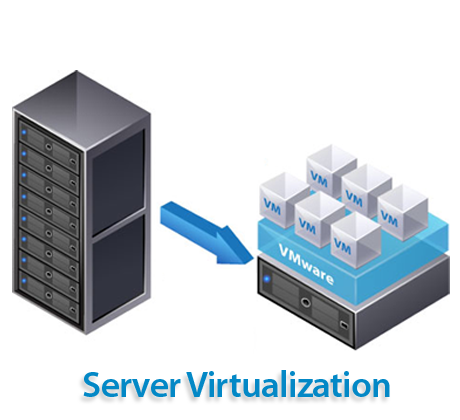
The Server Virtualization Industry is evolving as enterprises balance cloud migration with ongoing reliance on virtual machines. While containers and public cloud services grow, VMs remain essential for many applications, including legacy enterprise software and stateful workloads. The industry includes hypervisor vendors, management platform providers, hyperconverged infrastructure suppliers, backup and DR vendors, and systems integrators. Industry maturity is high, but competition is changing due to licensing shifts, hybrid cloud strategies, and demand for Kubernetes integration. Many organizations are not moving entirely to public cloud; they are adopting hybrid models where virtualization remains the backbone of private data centers and private cloud platforms. The industry is responding by adding automation, self-service catalogs, and container orchestration features. Security and compliance requirements are also shaping industry priorities, increasing focus on access controls, auditing, and hardening. The industry’s success depends on delivering stable operations with modern developer experience, enabling enterprises to modernize gradually without disrupting critical systems.
Industry dynamics emphasize platform consolidation and operational simplicity. Enterprises want fewer tools and more integrated stacks. Hyperconverged solutions bundle compute and storage to simplify deployment. Integrated software-defined data center offerings combine compute, storage, and network virtualization for unified policy control. This integration can increase vendor stickiness but also increases lock-in concerns. Therefore, interoperability and open APIs remain important. The industry is also shifting toward service-oriented operations. Virtualization is managed like a platform with defined catalogs, automation, and SLOs. This aligns with platform engineering trends, reducing ticket-based provisioning and improving speed. Backup and disaster recovery integration is becoming more tightly coupled, enabling faster recovery and better ransomware resilience. Hybrid connectivity to public cloud is also a key dynamic, supporting DR and migration. Edge computing introduces new needs for lightweight clusters and remote management. Talent and skills availability influence the industry; virtualization is well understood, but integrating automation and Kubernetes requires new capabilities. Vendors and integrators increasingly provide training and managed services to help customers operate these platforms effectively.
Challenges include cost pressures and governance. Virtualization reduces hardware costs, but licensing and support can be significant. VM sprawl can increase costs and complexity if governance is weak. Performance challenges arise when clusters are overcommitted or storage is undersized. Security risks include management plane exposure and patching gaps. The industry must address these challenges through automation, monitoring, and policy enforcement. Another challenge is the perception that virtualization is “legacy” compared to cloud-native approaches. Vendors respond by integrating Kubernetes, APIs, and automation to remain relevant for modern workflows. Migration complexity is also a challenge; moving large VM estates is risky and requires careful planning. Therefore, customers seek stable platforms and strong migration tools. The industry must also support compliance requirements, including audit trails and access controls, especially in regulated sectors. Sustainability pressures may increase interest in consolidation and efficient utilization, reinforcing virtualization’s value. The industry’s ability to deliver predictable economics and stable operations will determine adoption amid changing technology narratives.
Industry outlook suggests continued relevance and innovation around operations. Virtualization will remain central for many workloads, while containers will run alongside or on top of VMs. Platforms that unify VM and Kubernetes operations will gain attention. Licensing and economics will continue influencing platform choices, potentially shifting market dynamics. Managed services may grow as organizations outsource operations and focus internal teams on applications. Edge deployments will expand, requiring simplified management. Security and ransomware resilience will remain priorities, increasing demand for integrated backup and immutable recovery capabilities. The server virtualization industry will be judged by operational outcomes: uptime, recovery readiness, provisioning speed, and cost transparency. Vendors that provide stable, secure platforms with modern automation and hybrid integration will lead. As enterprises modernize at different speeds, virtualization remains the dependable foundation that supports both legacy and modern applications while enabling gradual migration to cloud-native architectures.
Top Trending Reports:

 Arabic
 French
 Spanish
 Portuguese
 Deutsch
 Turkish
 Dutch
Dutch
 Italiano
 Russian
 Romaian
 Portuguese (Brazil)
 Greek
Greek